Villa Design in Mirdif and Mirdif Hills
Mirdif is one of Dubai's older residential districts, made up mainly of villa developments and privately held villas on individual plots. Work here rarely begins with empty ground. The usual brief is a house built for another decade and another family, standing on a plot its owner now wants to use differently. Designing in Mirdif therefore starts with a survey and a decision about what stays, long before anything is drawn.

LKYOOB designs villas for plots in Mirdif and lodges its own permit applications. The district has no single master developer across its older streets. Some plots are privately held, while named developments such as Uptown Mirdif, Shorooq and Mirdif Hills each sit under their own management, so whether a developer or a community body has a say is settled plot by plot. Building work in the Emirate of Dubai is regulated by Dubai Municipality through its Buildings Regulation and Permits Agency, whose published procedures cover residential villas in both private and investment categories, and whose circulars deal separately with modification drawings, maintenance work permits and the permitting of demolition works. LKYOOB is registered with Dubai Municipality in the name KYOOB ENGINEERING CONSULTANCY L.L.C and classified to G+4, which covers villa-scale housing. For an owner in Mirdif the practical effect is that the survey, the design and the application stay inside one practice.
Mirdif at a glance
| Community | Mirdif, Dubai community 251, about 9.2 square kilometres |
|---|---|
| Character | Mainly villa developments and single privately held villas |
| Ownership | Listed among Dubai's non-freehold areas, where purchase is limited to UAE and GCC nationals |
| Villa plots in listings | About 2,400 to 10,000 square feet, with built-up areas to about 16,500 square feet |
| Uptown Mirdif | Gated development by Union Properties, villas about 1,650 to 5,000 square feet |
| Mirdif Hills | Dubai Investments Real Estate; Janayen, Nasayem and Multaqa avenues; apartments and duplexes, not villas |
| Permitting | Building work in the Emirate of Dubai is regulated by Dubai Municipality through its Buildings Regulation and Permits Agency |
Does a Mirdif brief start with the house or the plot?
In an established district the plot is rarely a blank sheet, and in Mirdif it usually carries a house that has been extended, re-roofed or re-serviced at least once. The first piece of work is therefore a measured survey rather than a sketch: levels, boundary positions, the structural grid of the existing villa, the condition of its slabs and roof, the route of its services, and the planting that has matured around it. That record tells an owner which parts of the house are worth keeping and which are holding the plan back. A villa whose structure is sound may need only its layout reorganised and its envelope improved, while one whose frame limits every future move is better taken down. Settling this question early keeps the budget honest, because the answer governs the drawings, the approvals and the sequence of work on site. It is also the point at which a family's real brief tends to surface, once the existing house stops setting the terms.
Which approvals does work on a Mirdif villa need?
Building work in the Emirate of Dubai is regulated by Dubai Municipality through its Buildings Regulation and Permits Agency, and the department publishes permit procedures for residential villas in both private and investment categories. What matters in a district like Mirdif is that the municipality treats different kinds of work separately. Its building and planning circulars cover the approval of modification drawings, the regulation of maintenance work permits, a fast track permit for private villas, the permitting of demolition works, and compliance with construction inside plot boundaries. A rebuild, an extension and an internal reorganisation therefore follow different paperwork, even when they happen on the same plot in the same year. Reading the right route at the outset saves an owner from preparing one set of drawings and then learning that another was required. LKYOOB prepares and lodges these applications itself, so the practice that measured the existing house is the practice answering any question about it later.
Extension, or demolition and rebuild?
The choice between extending a Mirdif villa and replacing it is decided by the plot as much as by taste. Listings across the district show villa plots running from roughly 2,400 square feet in the gated developments to about 10,000 square feet on the older streets, and the wider the plot, the more room an addition has before it begins to eat the garden that made the house pleasant to live in. Where the existing frame is sound and a family needs one more room, a considered addition at ground level, or a partial upper storey, usually gives more house for less disruption. Where the plan is cellular, the ceilings low and the services at the end of their life, the arithmetic turns, and a new house on the same plot gives a better result for a comparable effort. The honest answer comes out of the survey rather than out of a preference, and it is worth reaching before the design starts.
What the mix of old streets and gated developments means
Mirdif holds several kinds of housing at once, and the differences matter to a design. The older streets are made up of privately held villas on individual plots. Uptown Mirdif is a gated development by Union Properties, where villas run from about 1,650 to 5,000 square feet. Mushrif Village is a smaller freehold group of villas and townhouses of roughly 2,795 to 4,737 square feet. Mirdif Hills, the newer address beside Mushrif Park, was built by Dubai Investments Real Estate as three avenues, Janayen, Nasayem and Multaqa, and it holds apartments, duplexes and a hotel rather than villas, so an owner who says Mirdif Hills usually means the villa streets around it. Mirdif is also listed among the emirate's non-freehold areas, where purchase is limited to UAE and GCC nationals. The owner is therefore often a family with a long view of the house, which tends to favour repair and enlargement over resale styling.
How does LKYOOB work on an occupied plot?
Most Mirdif projects happen in a street where people are at home. That shapes how a job is planned as much as how it is drawn. Access for deliveries, the position of the site cabin, the noise of demolition and the reach of a crane over a boundary are questions for the design stage, not for the first week on site. Where a family intends to stay in part of the house while work goes on, the drawings are phased so that a kitchen, a bathroom and a way in and out remain usable, and the wet trades are grouped rather than spread across months. LKYOOB designs villas for plots in Mirdif and lodges its own permit applications, and its classification to G+4 covers the scale of housing found here. Holding the survey, the design and the application in one practice keeps the sequence legible, which is the part an owner living through the work actually feels.
LKYOOB projects in Mirdif
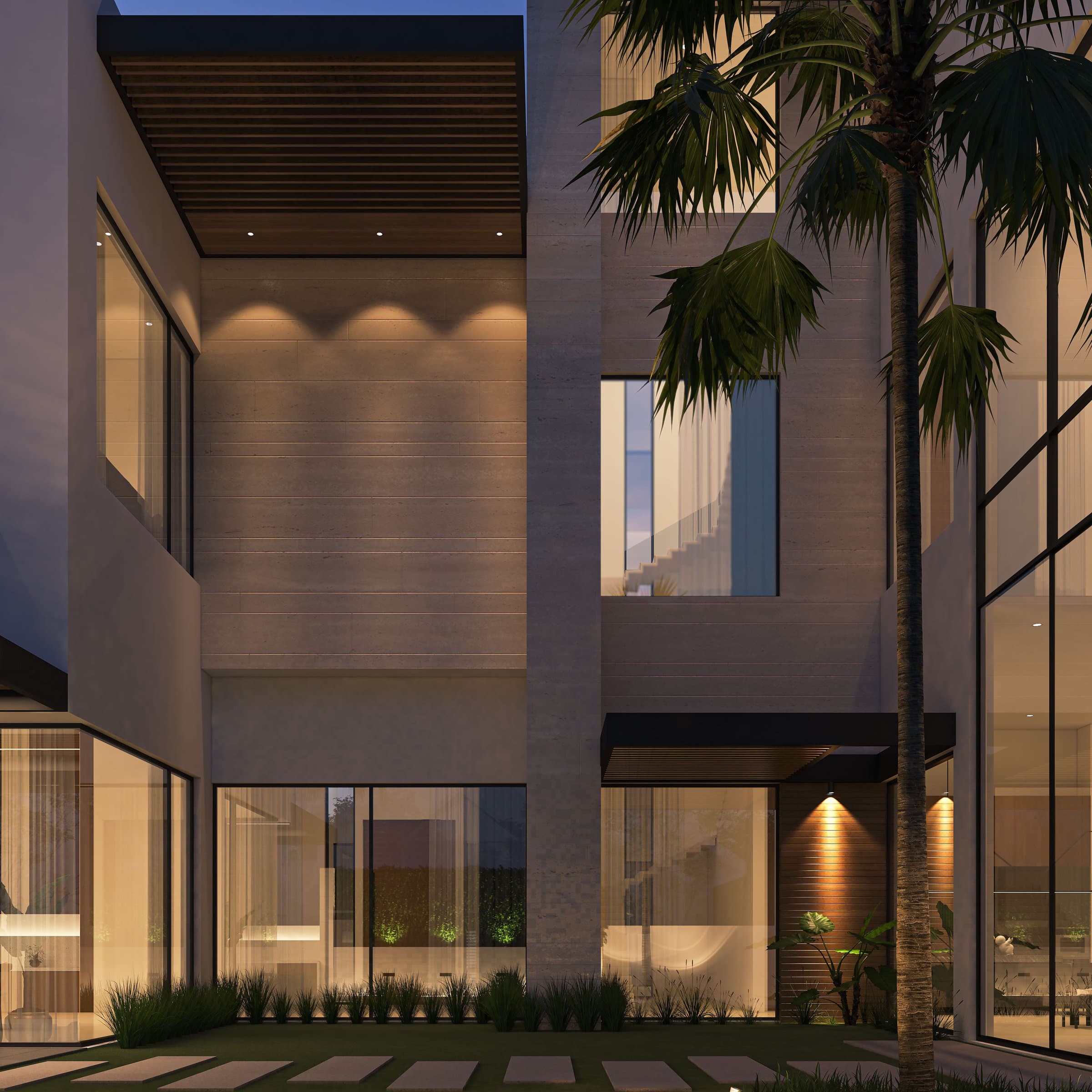
These are commissions LKYOOB has drawn for plots in Mirdif. Each page states whether its images are photographs of a finished house or design visualisations produced before construction.
Questions owners ask about Mirdif
Can I extend a villa in Mirdif rather than rebuild it?
Often, yes. It depends on the plot width, the setbacks the plot has to keep and whether the existing structure can carry the change. A measured survey settles it. Dubai Municipality treats an addition, an internal modification and a demolition as separate permits, so the route follows from the decision rather than the other way round.
Who grants the permit for work on a Mirdif villa?
Building work in the Emirate of Dubai is regulated by Dubai Municipality through its Buildings Regulation and Permits Agency, which publishes permit procedures for private and investment villas. Where a plot sits inside a named development, that development's management is confirmed as well. LKYOOB checks the route for the specific plot before drawings are prepared, then lodges the application.
Can an expatriate buy a villa in Mirdif?
Mirdif appears among the emirate's non-freehold areas, where purchase is limited to UAE and GCC nationals. Expatriate families commonly rent villas there instead. Mushrif Village is described as freehold, so ownership status is worth confirming against the title deed for the specific plot rather than for the district as a whole.
Is Mirdif Hills a villa community?
No. Mirdif Hills was built by Dubai Investments Real Estate beside Mushrif Park as three avenues, Janayen, Nasayem and Multaqa, and it holds apartments, duplexes, a hotel and retail rather than villas. Owners who describe a villa project as being in Mirdif Hills usually mean a plot on one of the villa streets nearby.
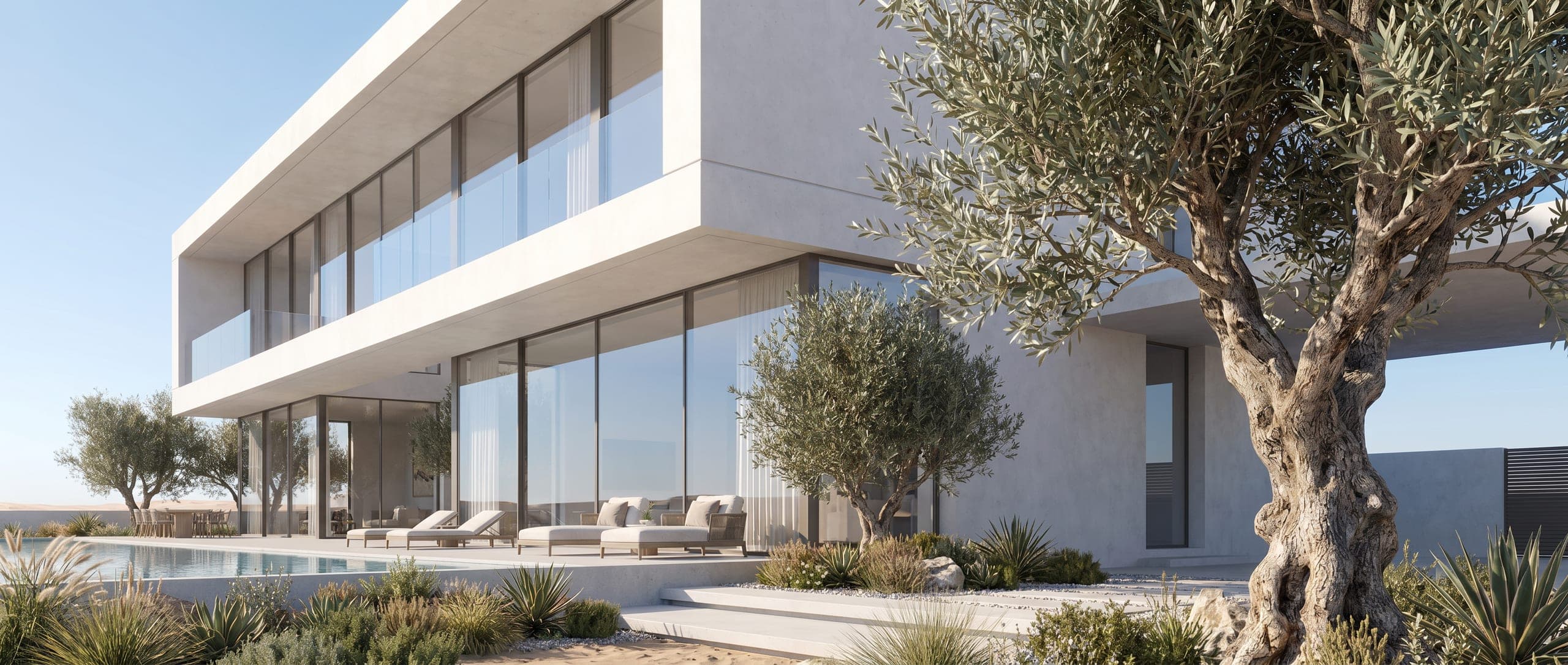
A Mirdif commission is usually a second chapter for a house rather than a first. The calm of the finished villa comes from an honest survey, a clear choice between extending and rebuilding, and the right permit route taken in the right order. LKYOOB works this way across the district, and a conversation about a particular plot is the natural place to begin.
Begin a conversation with the studio in Jumeirah.
Other Dubai communities · How to choose a villa architecture firm · The studio's services