Villa Design in Jumeirah and Umm Suqeim
Jumeirah runs along the coast in three administrative communities, Jumeirah 1, 2 and 3, with Umm Suqeim continuing the same strip to the south. Almost every plot here already carries a house, so the work is rarely a blank site. It is a question of what to keep, what to replace and what to add. LKYOOB keeps its own studio in Jumeirah 1 and designs villas along this stretch of the coast.
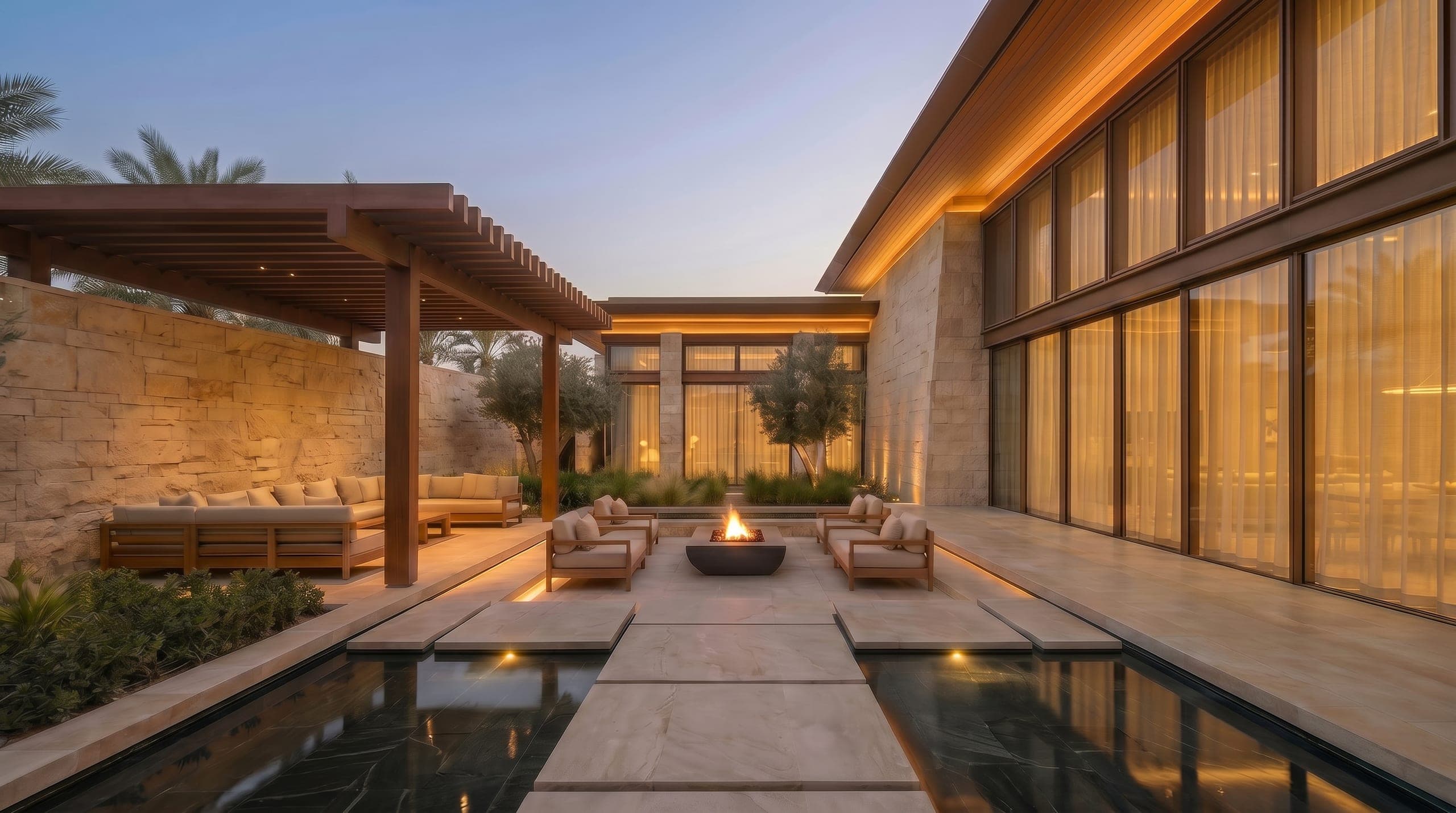
Villa design in Jumeirah and Umm Suqeim covers the established residential districts along Jumeirah Beach Road and Al Wasl Road: Jumeirah 1, 2 and 3, and Umm Suqeim 1, 2 and 3. These are mainland plots rather than free zone or master community land, and the building permit for a house is issued by Dubai Municipality through its Building Control and Building Permits Department, which sets out residential villas as a category of their own. Because the districts are long settled, most commissions begin with an existing house: a redesign inside the current envelope, an extension drawn against the present villa regulations, or a demolition and rebuild on the same plot. LKYOOB designs villas for plots in Jumeirah and Umm Suqeim and lodges its own permit applications. The studio is registered with Dubai Municipality in the name KYOOB ENGINEERING CONSULTANCY L.L.C, classified to G+4, and works from an address in Jumeirah 1.
Jumeirah at a glance
| Districts covered | Jumeirah 1, 2 and 3, the three administrative communities of Jumeirah, together with Umm Suqeim 1, 2 and 3 |
|---|---|
| Permit authority | Dubai Municipality, through its Building Control and Building Permits Department, which publishes separate permit procedures for residential villas |
| Typical villa sizes, Jumeirah 1 | About 2,500 to 14,000 square feet, with a four bedroom villa around 4,000 square feet |
| Typical villa sizes, Jumeirah 2 | About 1,800 square feet for a three bedroom house rising to about 12,000 square feet for the largest |
| Typology | Established coastal villa districts of mostly free standing houses, with older large villas and private gardens in Jumeirah 3 and Umm Suqeim |
| Ownership | Foreign nationals are not permitted to buy property in Jumeirah 1, and property in Umm Suqeim may only be sold to GCC citizens |
| Setbacks | Minimum setback for villas of 1.5 metres, with an additional 1.5 metre setback for rooftop floors across all construction boundaries |
What does the Dubai Municipality permit route ask of a villa here?
Jumeirah and Umm Suqeim are mainland districts, so a villa is permitted by Dubai Municipality rather than by a free zone regulator or a development authority. The municipality's Building Control and Building Permits Department publishes the procedures and steps for issuing building permits and completion certificates, and it separates residential villas, private and investment, from industrial buildings and from multi storey and public buildings. That distinction is useful, because a villa file is then read against villa procedures rather than against rules written for larger buildings. Where a plot sits inside a gated compound or a sub-community with its own management, a further consent can apply, so LKYOOB confirms the route for the specific plot before drawings begin rather than assuming it. The practical effect for an owner is a single permitting conversation with one authority, and a drawing set prepared from the outset in the form that authority expects to read.
How much can an existing villa here be extended?
Dubai Municipality introduced its Home First initiative for Emirati families, and it changed several of the figures a villa extension is drawn against. The minimum setback for villas was reduced to 1.5 metres, with an additional 1.5 metre setback applied to rooftop floors across all construction boundaries. Families may expand a villa with a full extension across the second floor. Setbacks between service annexes and the main villa were removed, and an annex may now reach a height of up to eight metres across two floors. A side family annex may be built alongside the main villa, carrying bedrooms, living rooms and a kitchen, and a homeowner may build a separate villa for a son within the existing family property. On an older Jumeirah plot these allowances often decide whether a house is extended or replaced outright. Eligibility is read against the individual plot and its ownership, so the design begins with that check rather than with a sketch.
Who owns the land, and why does that change the brief?
Ownership shapes the brief in these districts more than it does in the freehold communities inland. Foreign nationals are not permitted to buy property in Jumeirah 1, and in Umm Suqeim properties may only be sold to GCC citizens, so renting is the route open to most expatriate residents. The consequence is that the people commissioning a villa here are usually long term owners of land a family already holds, rather than buyers planning a resale. That changes what a design is asked to do. A house drawn for a family that intends to keep it is planned around how the household will change over time: a majlis that works for large gatherings, guest rooms that can be closed off when empty, and ground kept in reserve for an annex or a second dwelling. It also justifies spending on the parts of a building that repay slowly, in insulation, shading and finishes that hold their appearance.
How does the coast shape materials and orientation?
Jumeirah 1, 2 and 3 run along Jumeirah Beach Road with the Arabian Gulf on one side, and Umm Suqeim continues that coastal strip. Jumeirah 3 sits at the coast with one side facing the ocean, and much of its stock is older, large villas with private gardens. Proximity to the sea sets the specification. External metalwork, fixings and rainwater goods are chosen to resist salt air, and render and stone are selected for how they weather rather than for how they look on the day they go in. Plots are close together and the streets narrow by the standards of a planned community, so privacy is resolved through the plan, the boundary treatment and the placement of openings rather than by pushing the house back. Mature gardens are common on long held land, and a design that keeps the established planting usually settles into its street faster than one that clears it.
How does LKYOOB work on a Jumeirah plot?
LKYOOB keeps its studio in Jumeirah 1, so a plot in these districts is a short drive rather than a site visit planned around traffic. Work on an existing house begins with a measured record of what is actually there: levels, the structure that can be kept, the condition of the boundary, and the trees worth designing around. Only then is the choice made between a redesign inside the existing envelope, an extension drawn against the current villa regulations, and a demolition and rebuild on the same ground. The studio designs villas for plots in Jumeirah and Umm Suqeim and lodges its own permit applications, so the drawings that answer a municipal query are the drawings the studio produced. LKYOOB is registered with Dubai Municipality in the name KYOOB ENGINEERING CONSULTANCY L.L.C and is classified to G+4, which covers work at villa scale without strain.
LKYOOB projects in Jumeirah
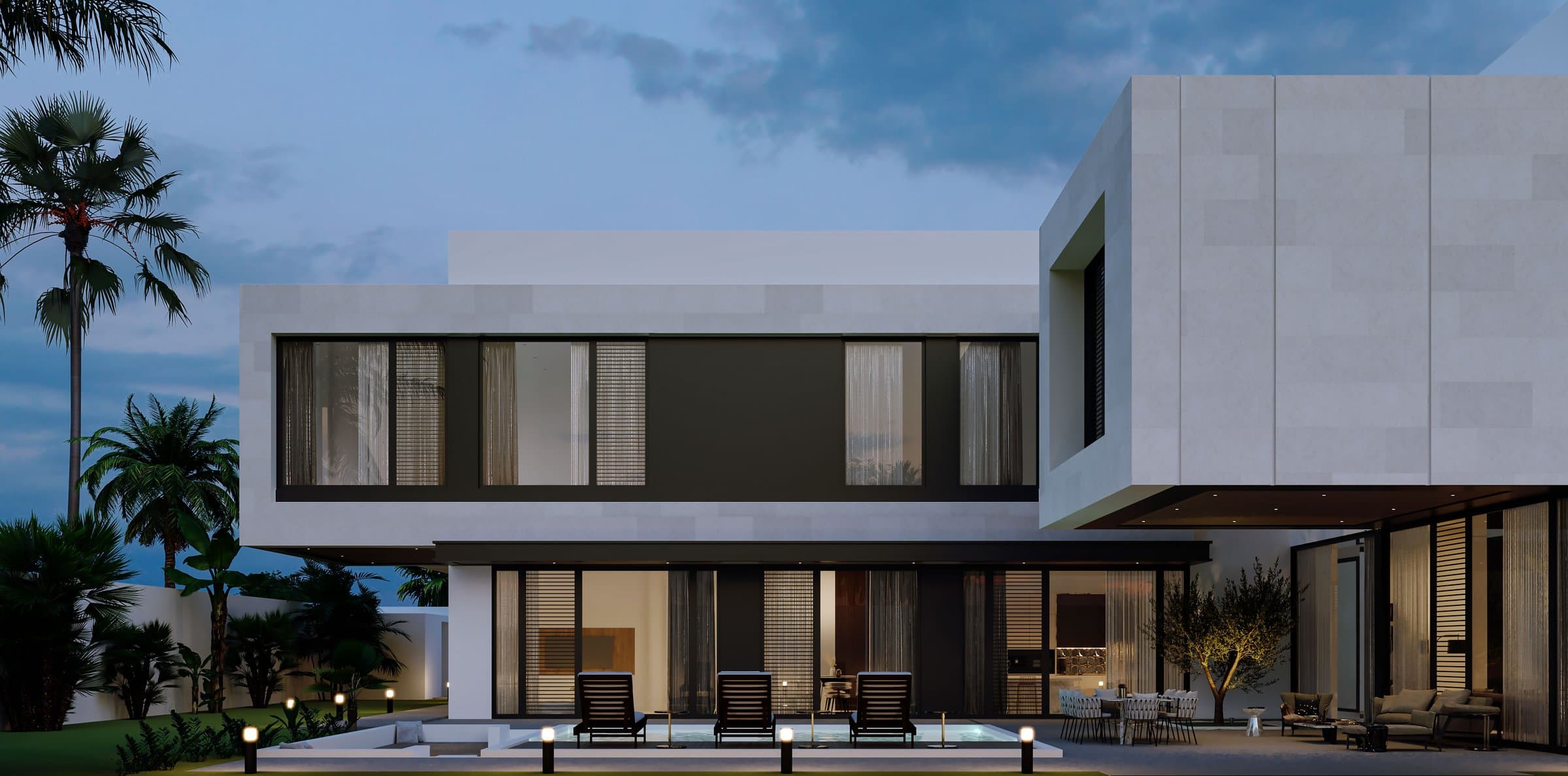
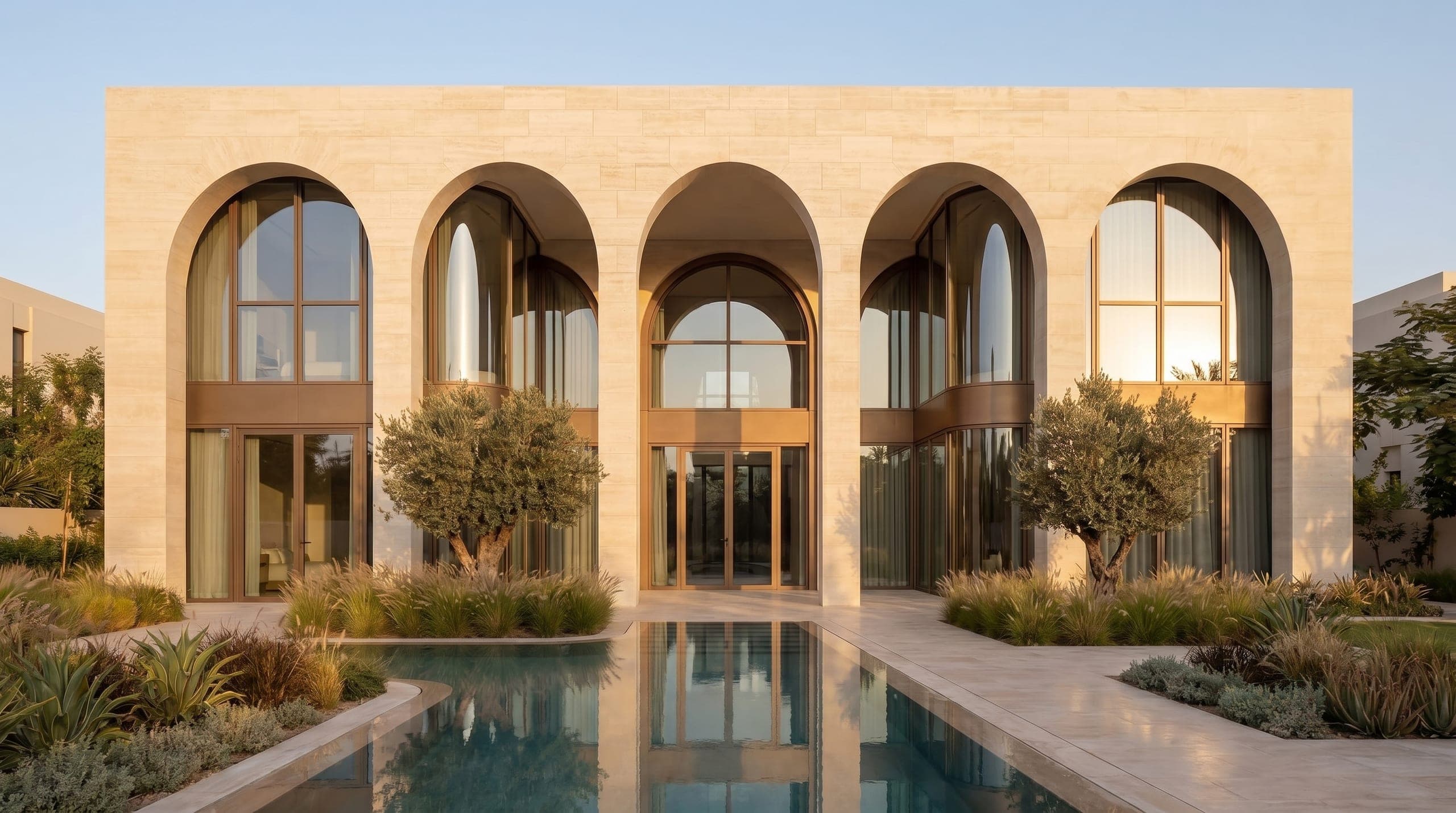
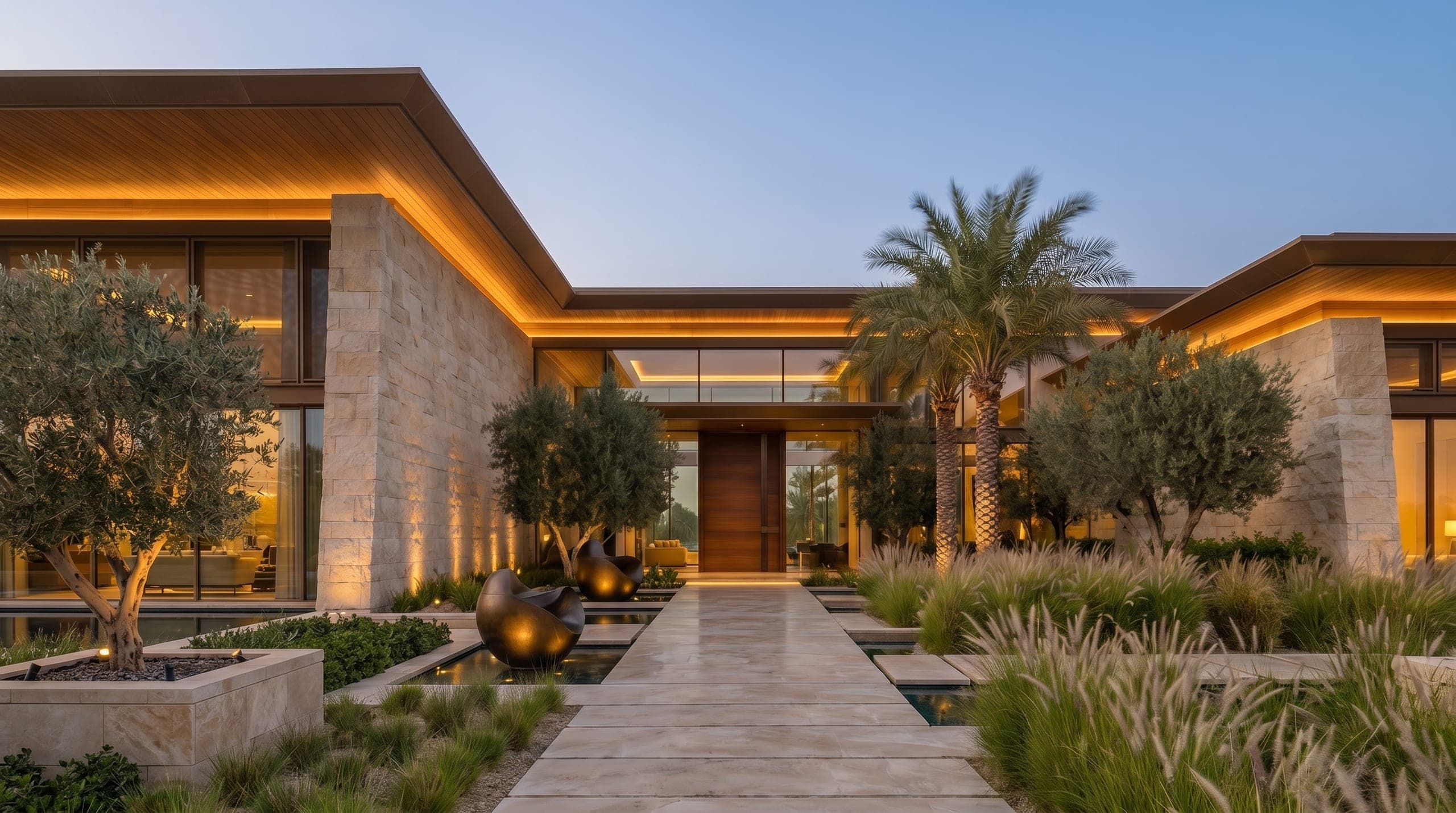
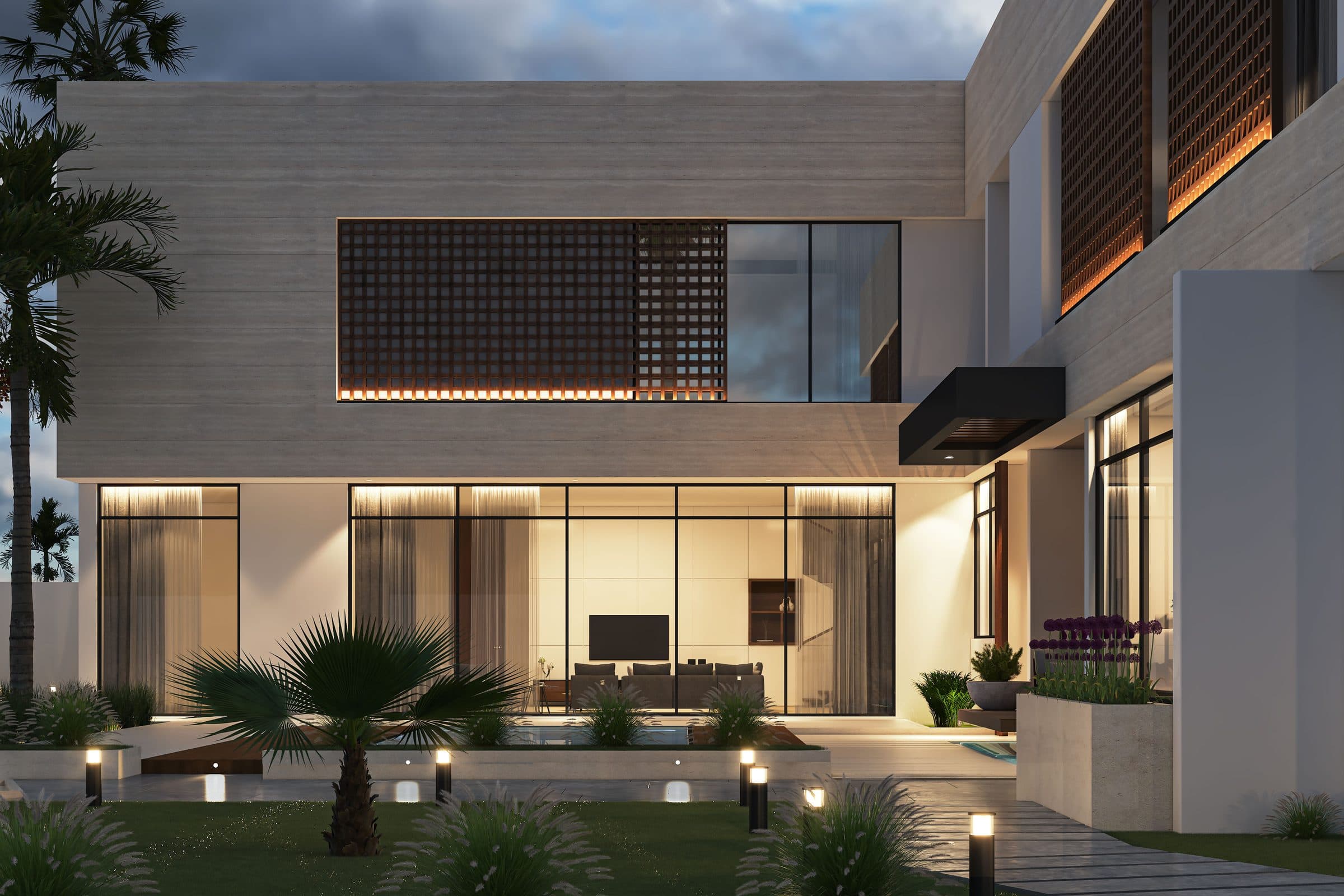
These are commissions LKYOOB has drawn for plots in Jumeirah. Each page states whether its images are photographs of a finished house or design visualisations produced before construction.
Questions owners ask about Jumeirah
Can I add a floor to my villa in Jumeirah?
Under Dubai Municipality's Home First initiative a villa may be expanded with a full extension across the second floor, subject to a 1.5 metre minimum setback and an additional 1.5 metre setback for rooftop floors. The initiative was introduced for Emirati families, so eligibility is checked against the plot and its ownership before any design work starts.
Do I need a master developer no objection certificate in Jumeirah?
Jumeirah and Umm Suqeim are mainland districts rather than developer run master communities, so they do not carry the kind of developer certificate that an Emaar or Nakheel community requires. The building permit is issued by Dubai Municipality. Where a plot lies inside a gated compound with its own management, a further consent can apply, and LKYOOB confirms the route plot by plot.
Is it better to renovate or rebuild an older Jumeirah villa?
It depends on what a survey finds. Where the structure is sound and the layout can be opened up, a redesign inside the existing envelope keeps more value. Where the frame is tired or the plan cannot take the rooms a family needs, a rebuild on the same plot is usually the better use of the land. The survey decides, not the preference.
Can I buy a villa plot in Jumeirah as a foreign national?
Not in Jumeirah 1, where foreign nationals are not permitted to buy property, and not in Umm Suqeim, where property may only be sold to GCC citizens. Most expatriate residents in these districts rent. Owners commissioning new work are generally families holding land they already own, which is why so much of the design work here is redesign and extension.
A villa in Jumeirah or Umm Suqeim is nearly always a second chapter on ground a family already knows well. The design question is which parts of that history to keep and which to draw again. LKYOOB works on these plots from a studio in Jumeirah 1 and lodges its own permit applications. A conversation about a specific address is the natural place to begin.
Begin a conversation with the studio in Jumeirah.
Other Dubai communities · How to choose a villa architecture firm · The studio's services